Why Am I Always Tired? The Blood Tests That Find the Cause
 Dr. Sheena Cherry, Specialist in Internal Medicine
13 min read
You sleep seven hours and wake up exhausted. Coffee helps until mid-afternoon, then the slump arrives. Weekends do not fix it. You start to wonder whether something is wrong, and whether a blood test would show it.
Feeling tired all the time is one of the most common reasons adults see a doctor. Sometimes the cause is a fixable problem such as low iron, an underactive thyroid or high blood sugar, and a short list of blood tests finds it. Often the tests come back normal, and the answer lies in sleep, stress, mood, medicines or recovery from a recent illness.
Why am I always tired? The short answer
- The most useful first blood tests for tiredness are a full blood count, ferritin (iron stores), thyroid function (TSH), HbA1c or glucose, kidney and liver tests, and an inflammation marker (CRP or ESR).
- Depending on your symptoms, a doctor may add vitamin B12, folate, vitamin D, a coeliac test or others.
- Common causes found on blood tests include iron deficiency, anaemia, thyroid problems, diabetes and vitamin deficiencies.
- Many tired people have normal blood tests. Poor sleep, sleep apnoea, stress, low mood, lifestyle, medicines and recovery after a virus are common causes.
- See a doctor if tiredness lasts more than a few weeks, affects daily life or comes with weight loss, fever, night sweats or breathlessness.
In this guide: Tired or sleepy? · Common causes · Blood tests for tiredness · What the results can mean · Tired but normal blood tests · Tiredness in the UAE · What helps · FAQs
Tired, fatigued or sleepy?
These words sound similar, but they point to different causes, so it helps to be precise when you describe them to a doctor.
| What you feel | What it often points to |
|---|---|
| Sleepy: you nod off when sitting still, reading or driving | Not enough sleep, poor-quality sleep, sleep apnoea, some medicines |
| Tired or low energy: no get-up-and-go, but you cannot nap | Stress, low mood, anaemia, thyroid problems, inactivity |
| Physically weak: muscles give out, stairs are hard | Low vitamin D, thyroid or muscle problems, low potassium, some medicines |
| Wiped out after activity: worse a day or two after effort | Post-viral fatigue, ME/CFS |
Common causes of feeling tired all the time
Doctors usually think about tiredness in three groups. More than one is often involved.
1. Sleep and lifestyle
- Too little sleep, late nights, irregular hours or shift work
- Screens and caffeine late in the day
- Too little physical activity, or very intense training without enough rest
- Irregular meals, skipped breakfast, crash diets
- Alcohol, which disturbs sleep even when it helps you fall asleep
- Not drinking enough water, especially in hot weather
2. Mental and emotional causes
- Stress and burnout
- Depression, which often shows up as tiredness before low mood is noticed
- Anxiety, which can disturb sleep and drain energy
- Major life changes: a new baby, caring for a relative, bereavement, moving country
3. Medical causes
| Condition | Clues | Main test |
|---|---|---|
| Iron deficiency or anaemia | Heavy periods, breathlessness on stairs, pale skin, hair shedding | Full blood count, ferritin |
| Underactive thyroid | Weight gain, feeling cold, constipation, dry skin | TSH, free T4 |
| Diabetes | Thirst, passing urine often, blurred vision, infections | HbA1c, glucose |
| Vitamin B12 or folate deficiency | Tingling, memory problems, sore tongue, vegetarian diet | B12, folate |
| Low vitamin D | Aching bones and muscles, weakness | 25(OH) vitamin D |
| Sleep apnoea | Loud snoring, pauses in breathing, morning headaches, sleepiness | Sleep study |
| Coeliac disease | Bloating, diarrhoea, low iron that keeps coming back | Coeliac antibody test |
| Kidney or liver disease | Swelling, itching, changes in urine | Kidney and liver tests |
| Infection or recovery from one | Recent flu, COVID-19 or glandular fever | Depends on symptoms |
| Medicines | Started a new medicine before the tiredness began | Medicine review |
Less common medical causes include heart and lung disease, inflammatory and autoimmune conditions, hormone problems such as low cortisol or low testosterone, and cancer. These usually come with other symptoms, which is why a doctor will ask about weight, sweats, breathlessness and pain.
Which blood tests check for tiredness?
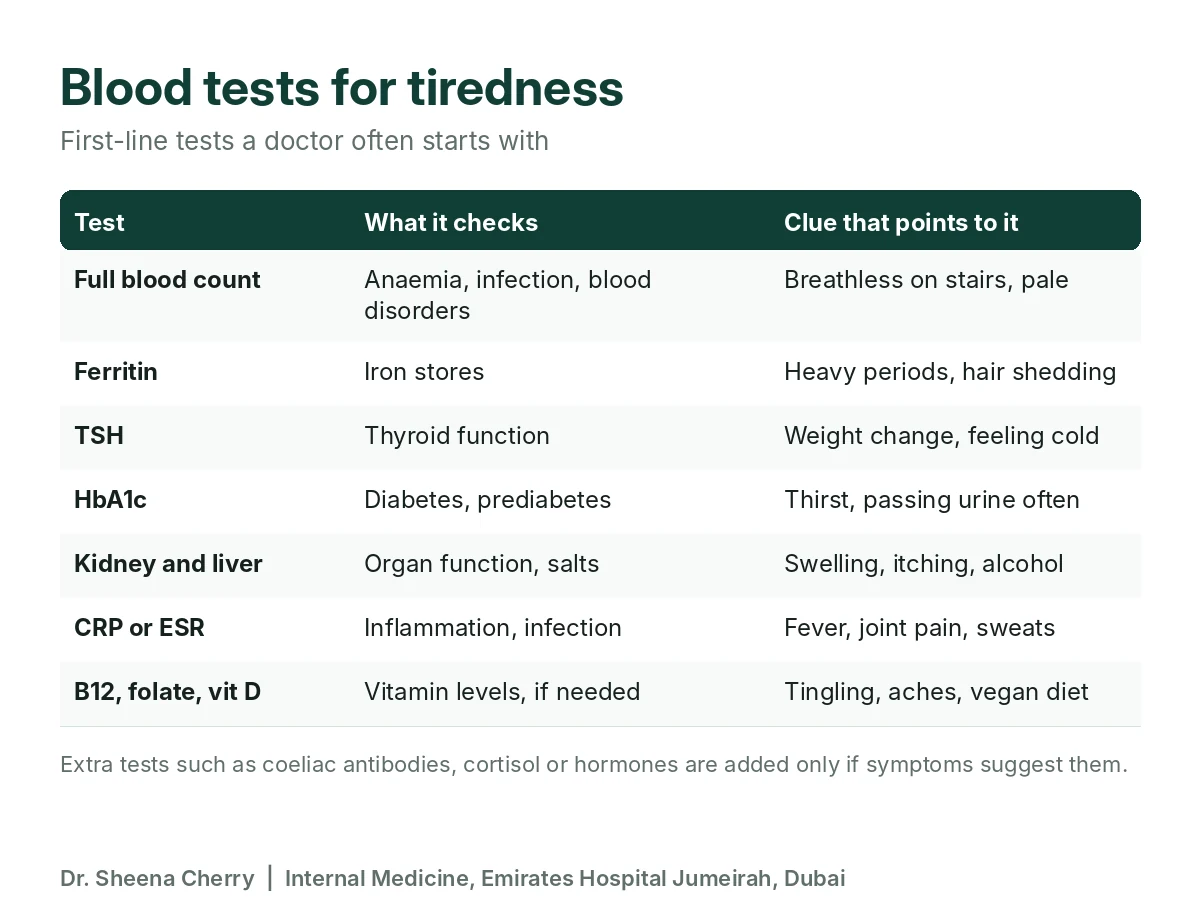
There is no single “tiredness test”. Doctors use a short set of first-line tests that pick up the most common treatable causes, then add others depending on your symptoms. This approach follows UK NICE guidance for adults with tiredness.
First-line tests
| Test | What it checks |
|---|---|
| Full blood count (CBC) | Anaemia, infection, blood disorders |
| Ferritin | Iron stores. Can be low before anaemia appears |
| TSH (and free T4) | Underactive or overactive thyroid |
| HbA1c or fasting glucose | Diabetes and prediabetes |
| Kidney function and electrolytes | Kidney problems, low sodium or potassium, dehydration |
| Liver function tests | Fatty liver, hepatitis, alcohol-related liver strain |
| CRP or ESR | Inflammation or hidden infection |
| Calcium (bone profile) | High or low calcium, parathyroid problems |
| Urine test | Sugar, protein, blood, infection |
Tests added if your symptoms suggest them
- Vitamin B12 and folate: tingling, memory problems, a vegetarian or vegan diet, metformin use, or large red cells on the blood count
- Vitamin D: bone or muscle pain, weakness, little sun exposure (see our guide to vitamin D deficiency in the UAE)
- Coeliac antibodies: gut symptoms or iron deficiency that keeps returning
- Creatine kinase (CK): muscle pain or weakness, or taking a statin
- Morning cortisol: weight loss, dizziness, salt craving, low blood pressure
- Hormones: testosterone in men with low libido, or tests related to periods or menopause in women
- Infection tests: such as glandular fever, hepatitis or HIV, depending on the history
- Pregnancy test: where relevant
More tests are not always better. Testing everything increases the chance of borderline results that cause worry but do not explain the tiredness. A good history usually narrows the list.
What your results might mean
These are common patterns a doctor looks for. Your own results need a doctor’s review.
| Pattern | Possible meaning |
|---|---|
| Low haemoglobin and low ferritin | Iron deficiency anaemia |
| Normal haemoglobin, low ferritin | Iron deficiency without anaemia, which can still cause tiredness |
| Low haemoglobin, large red cells (high MCV) | Possible B12 or folate deficiency, alcohol, thyroid or liver causes |
| High TSH, low free T4 | Underactive thyroid |
| HbA1c 6.5% or more | Diabetes, if confirmed |
| Raised CRP or ESR | Inflammation or infection somewhere, needs a search for the cause |
| Raised liver enzymes | Often fatty liver, sometimes alcohol, medicines or hepatitis |
| Vitamin D below 20 ng/mL | Deficiency that can cause aches and weakness |
A result just outside the reference range does not always explain how you feel, and a result just inside it does not always rule a problem out. For example, many labs call a ferritin of 15 “normal”, but people with heavy periods can feel tired at that level. That is why results are read together with your symptoms.
Tired all the time but blood tests are normal?
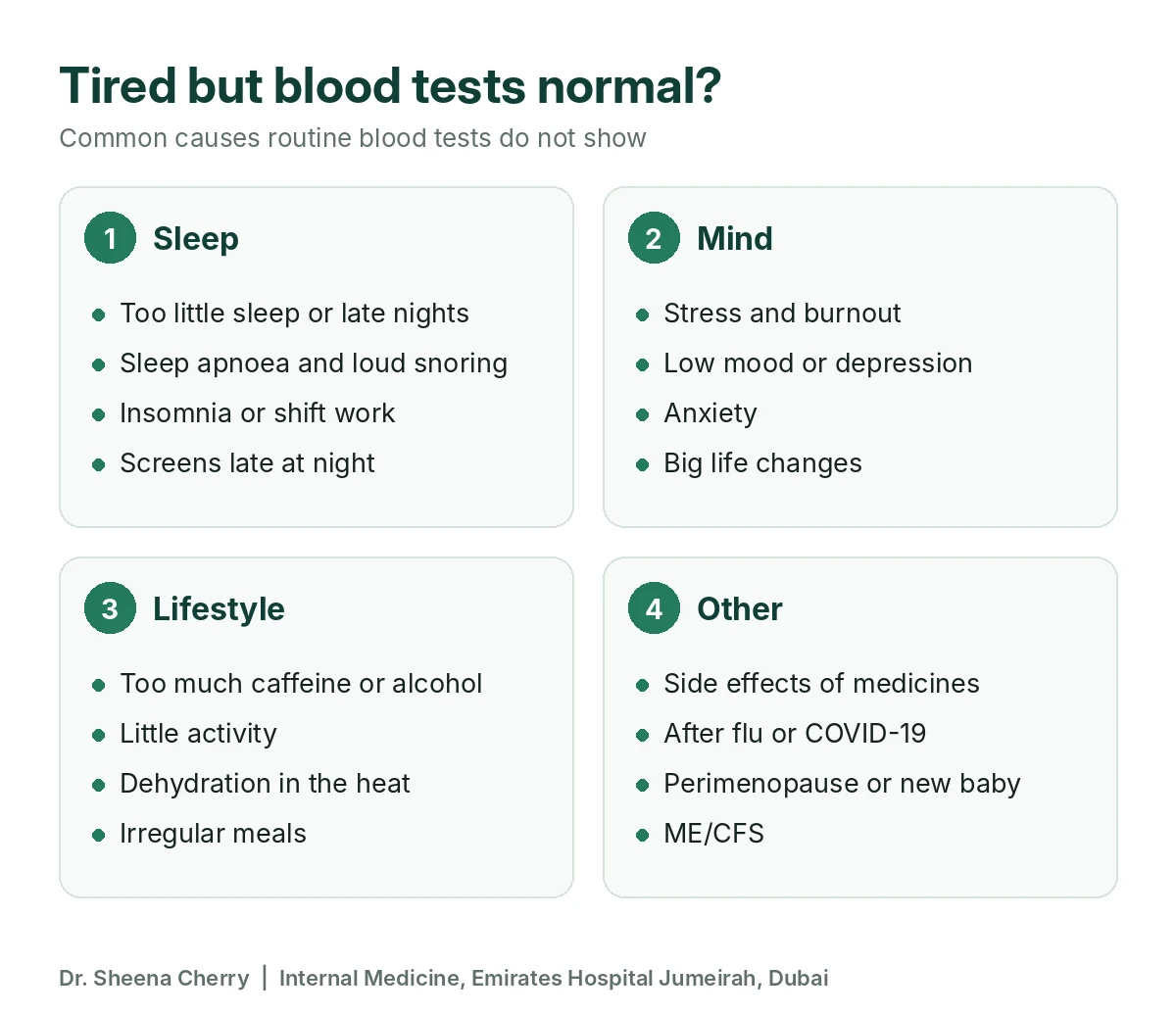
This is very common. It usually means the cause is something a routine blood test does not measure. Common causes are:
Sleep problems
Obstructive sleep apnoea is easy to miss. The airway narrows during sleep, breathing pauses many times a night and you wake unrefreshed, often without knowing why. Clues are loud snoring, a partner noticing pauses or gasping, morning headaches, a dry mouth and sleepiness during the day. It is more common with obesity, a large neck size and high blood pressure. A sleep study confirms it, and treatment can transform energy levels.
Insomnia, shift work and simply not getting enough sleep are also very common. Most adults need seven to nine hours.
Mood and stress
Depression and anxiety often show up first as tiredness, poor sleep and difficulty concentrating. Long-term stress and burnout drain energy in the same way. They are common and treatable.
Lifestyle factors
Heavy caffeine use, alcohol, very little activity, long hours at a screen, irregular meals and dehydration all add up. Small changes in several of these often help more than a single big change.
Medicines
Antihistamines, some blood pressure medicines (such as beta blockers), some antidepressants, sleeping tablets, pain medicines and others can cause tiredness. Never stop a prescribed medicine on your own, but do ask your doctor whether it might be playing a part.
After an infection
Tiredness can last weeks after flu, glandular fever or COVID-19. If it continues for months after COVID-19, see our page on post-COVID care.
ME/CFS
Myalgic encephalomyelitis or chronic fatigue syndrome (ME/CFS) is considered when disabling fatigue lasts at least three months and comes with symptoms that get worse after activity (post-exertional malaise), unrefreshing sleep and problems with thinking and memory. Blood tests are normal, and the diagnosis is made after other causes are ruled out, following NICE guidance.
Hormonal changes
Perimenopause, early pregnancy and the months after childbirth commonly cause tiredness, poor sleep and low mood, even with normal routine blood tests.
Tiredness in the UAE: local factors
- Heat and dehydration. Summer heat, even with short trips outdoors, increases fluid loss. Mild dehydration causes tiredness, headaches and poor concentration.
- Low vitamin D. Very common here because the heat keeps people indoors.
- Iron deficiency. Common among women, especially with heavy periods, pregnancy or a low-meat diet. Read more on iron deficiency symptoms and tests.
- Diabetes and prediabetes. About one in five adults in the UAE has diabetes, and many do not know it.
- Long hours and commutes. Long working days, late dinners and late-night screens shorten sleep.
- Ramadan. Changes in meal and sleep times can cause tiredness, particularly in the first week.
- Air conditioning and indoor life. Less daylight and less movement through the day can affect energy and sleep rhythm.
Three examples of how the cause was found
These are common situations. Your own results need a doctor’s review.
A 34-year-old woman with heavy periods
Her haemoglobin is normal, but her ferritin is 9. Iron deficiency without anaemia explains her tiredness and hair shedding. Iron treatment and a review of her periods follow.
A 48-year-old man who snores
All his blood tests are normal. His wife has noticed him stop breathing at night, and he falls asleep in meetings. A sleep study shows sleep apnoea. Treatment and weight loss restore his energy.
A 41-year-old with weight gain and feeling cold
Her TSH is high and free T4 is low. An underactive thyroid is diagnosed and treated with thyroid hormone, with a repeat test after six to eight weeks.
What helps with everyday tiredness
- Protect your sleep: the same bedtime and wake time each day, a dark, cool room and no screens in the last hour
- Cut caffeine after early afternoon and keep alcohol low
- Move every day: even a 20 to 30 minute walk improves energy over a few weeks. In summer, walk early, late or indoors
- Drink enough water, more in hot weather or after exercise
- Eat regular, balanced meals with protein, vegetables and wholegrains rather than sugary snacks
- Get daylight in the morning to help set your body clock
- Manage stress: short breaks, time outdoors, talking to someone you trust
- Keep a two-week energy diary: sleep times, caffeine, meals, activity and energy levels. It often reveals a pattern and helps your doctor
When to see a doctor
- Tiredness has lasted more than a few weeks without a clear reason
- It is affecting your work, family life or safety, such as feeling sleepy while driving
- You have heavy periods, a change in bowel habit or other new symptoms
- You snore loudly or someone has noticed pauses in your breathing
- You feel low, anxious or no longer enjoy things you used to
How to prepare for your appointment
- When the tiredness started and whether it is getting worse
- Your usual sleep times, and whether you snore
- Your periods, if relevant, and any recent pregnancy
- All medicines and supplements you take
- Any previous blood test results
- Your energy diary, if you kept one
How Dr. Sheena Cherry can help
Dr. Sheena Cherry is a DHA-licensed Specialist in Internal Medicine at Emirates Hospital Jumeirah, Dubai. Tiredness can come from the blood, thyroid, sugar, sleep, mood or medicines, often more than one at once. She takes a full history, examines you, orders the tests that fit your story rather than every test available, and explains the results in plain language. If the tests are normal, she helps you look at sleep, mood, medicines and lifestyle, and arranges a sleep study or specialist referral where needed. She also manages the common medical causes, including iron deficiency anaemia, thyroid disorders and diabetes.
Frequently asked questions
What blood tests should I ask for if I am always tired?
A full blood count, ferritin, thyroid function (TSH), HbA1c or glucose, kidney and liver tests, and CRP or ESR cover the most common medical causes. Vitamin B12, folate, vitamin D and a coeliac test may be added depending on your symptoms.
Why am I always tired even though my blood tests are normal?
Common reasons include poor or too little sleep, sleep apnoea, stress, depression or anxiety, lifestyle factors, medicines and recovery after a viral illness. These do not show on routine blood tests.
Can low iron make you tired even without anaemia?
Yes. Low iron stores (low ferritin) can cause tiredness, poor concentration and hair shedding even when haemoglobin is still normal.
Can thyroid problems cause tiredness?
Yes. An underactive thyroid commonly causes tiredness, weight gain, feeling cold and constipation. An overactive thyroid can also cause fatigue, along with weight loss and a fast heartbeat.
What vitamin deficiency causes tiredness?
Low iron, vitamin B12, folate and vitamin D can all contribute to tiredness. A blood test can check each of them.
Can diabetes make you tired?
Yes. High blood sugar can cause tiredness, along with thirst, passing urine often and blurred vision. An HbA1c test checks for diabetes.
Is it normal to feel tired every day?
Occasional tiredness is normal. Feeling tired every day for weeks, especially if rest does not help or it affects daily life, is worth discussing with a doctor.
How long should tiredness last before I see a doctor?
If tiredness lasts more than a few weeks without a clear reason, see a doctor. Go sooner if it comes with weight loss, fever, night sweats or breathlessness.
Can dehydration cause tiredness?
Yes. Even mild dehydration can cause tiredness, headaches and poor concentration, which is common in the UAE heat.
What is chronic fatigue syndrome?
ME/CFS is a long-term condition with disabling fatigue lasting at least three months that worsens after activity, along with unrefreshing sleep and thinking problems. It is diagnosed after other causes have been ruled out.
References
- NHS. Tiredness and fatigue
- NICE Clinical Knowledge Summaries. Tiredness/fatigue in adults
- NICE NG206. Myalgic encephalomyelitis (or encephalopathy)/chronic fatigue syndrome
- Investigating unexplained fatigue in general practice with a particular focus on CFS/ME. BMC Fam Pract 2016
- NHS. Obstructive sleep apnoea
- IDF Diabetes Atlas. United Arab Emirates
This guide is general information and does not replace a consultation. Read our medical disclaimer. For an emergency, call 998.
Specialist in Internal Medicine at Emirates Hospital Jumeirah, Dubai. MD in Internal Medicine, Fellowship in Critical Care Medicine and Postgraduate Certification in Cardiology from Johns Hopkins University. About Dr. Sheena