How to Read a Blood Test Report: Ranges, Flags and Key Numbers
 Dr. Sheena Cherry, Specialist in Internal Medicine
13 min read
The lab sends your results as a PDF. There are three pages of test names, numbers, units and ranges, with a few values marked H or L in red. Your appointment is a week away. Should you worry about the flags? Which numbers matter most?
Most flagged results are small and harmless, and a few need a doctor soon. Telling them apart starts with knowing how the report is laid out and how reference ranges are made.
How to read a blood test report: the short answer
- Each line shows the test name, your result, the unit and the reference range. A flag (H or L) means your result is above or below that lab’s range.
- Reference ranges usually cover the middle 95% of healthy people, so about 1 in 20 healthy people fall slightly outside the range on any single test.
- Always compare with the range printed on your own report. Ranges and units differ between labs.
- Look at patterns and trends: how results relate to each other and how they change over time.
- Contact a doctor the same day if the report says a result is critical or if you feel unwell.
In this guide: Parts of a report · 7 steps to read it · Reference ranges · Results chart · Units and conversions · The most important numbers · What can affect results · FAQs
The parts of a blood test report
Lab reports in the UAE look different from one lab to another, but they almost always include the same parts.
| Part of the report | What it tells you |
|---|---|
| Patient details | Your name, age, sex and ID. Check these first. Some ranges depend on age and sex. |
| Sample date and time | When the blood was taken. Some tests change through the day or after food. |
| Test name | What was measured, often with an abbreviation such as Hb, ALT or TSH. |
| Result | Your value. |
| Unit | How it was measured, such as g/dL, mmol/L or mg/dL. Always read the unit. |
| Reference range | The range the lab expects in healthy people. Sometimes called the normal range or biological reference interval. |
| Flag | H (high), L (low), or a symbol such as * or ↑. Some labs mark “critical” values that need urgent attention. |
| Comments | Notes from the lab, such as “sample haemolysed” or “please repeat”. These can change how a result is read. |
How to read your report in 7 steps
- Check it is yours. Name, date of birth and the date of the test.
- Look for critical flags or lab comments first. These are rare, but they matter most.
- Read each result with its unit and range. Compare your number with the range on the same line, not with a range you found online.
- Note how far outside the range a flagged result is. A haemoglobin of 11.8 when the range starts at 12.0 is very different from 8.5.
- Group results by panel. Look at the blood count together, kidney tests together, liver tests together. Patterns tell more than single values.
- Compare with previous results. A steady result slightly outside the range for years is usually less concerning than a normal result that is changing quickly.
- Write down your questions and take the report to your doctor, together with your symptoms and medicines.
Understanding reference ranges
A reference range is worked out by testing a large group of healthy people and taking the middle 95% of their results. That has two consequences:
- Healthy people are sometimes “abnormal”. About 5% of healthy people fall outside the range for any one test. Run 20 tests, and it is quite likely at least one will be flagged even if you are well.
- “Normal” does not always mean ideal. Some ranges describe what is common, not what is healthy. For example, a ferritin of 18 may sit inside a lab’s range, yet still be too low for someone with heavy periods. A fasting glucose near the top of the range may already suggest prediabetes risk.
Ranges also differ between labs because of different machines, methods and local populations. Some tests have different ranges for men and women, for children and older adults, and in pregnancy.
For a few tests, the report shows decision limits or target values instead of a population range. Cholesterol, HbA1c and vitamin D are common examples. Here the numbers come from clinical guidelines about risk, not from the average of healthy people.
Blood test results chart: common tests
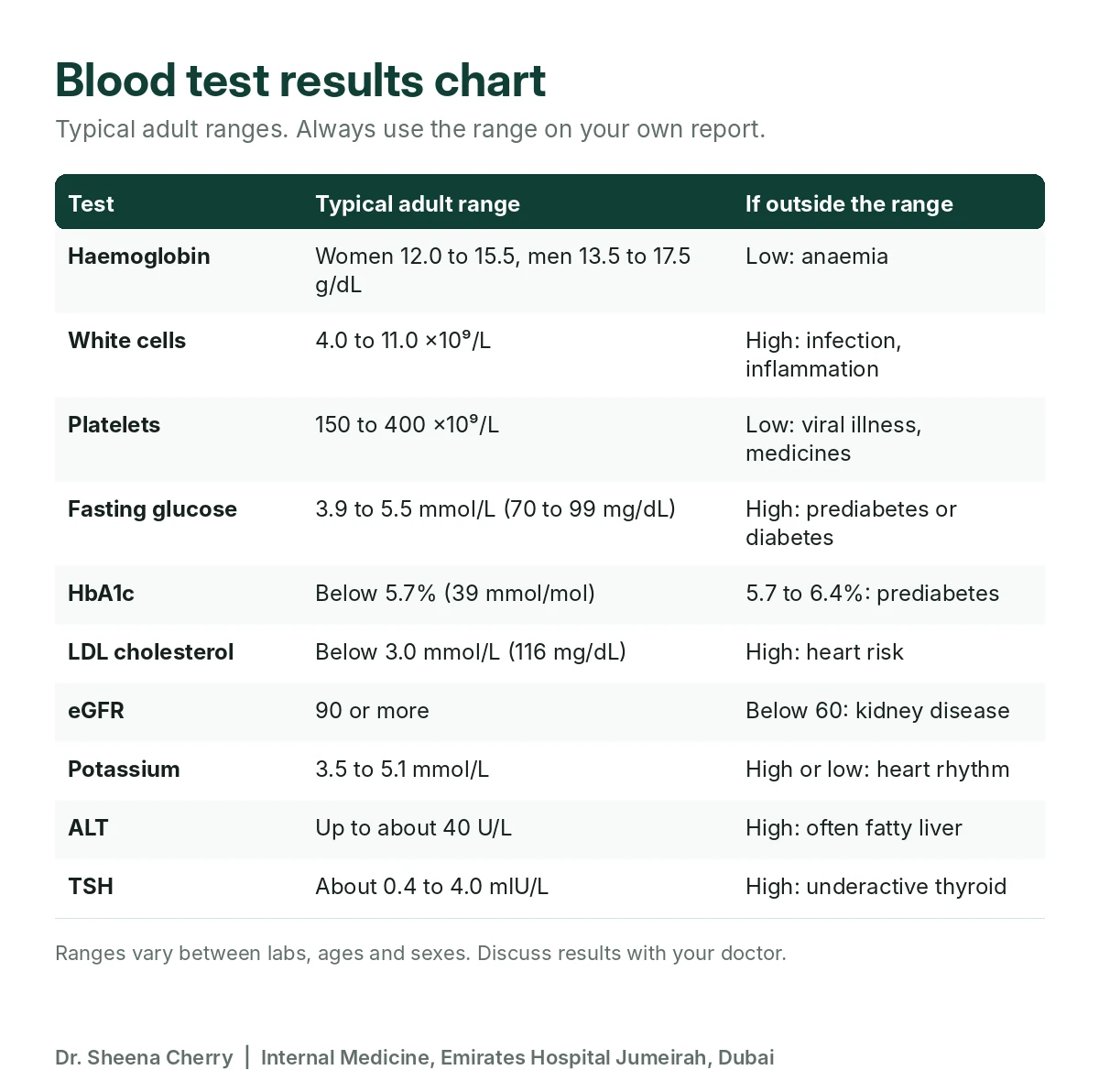
These are typical adult ranges to help you understand your report. Always use the range printed on your own report, as labs differ.
Full blood count (CBC)
| Test | Typical adult range | If low | If high |
|---|---|---|---|
| Haemoglobin (Hb) | Women 12.0 to 15.5 g/dL; men 13.5 to 17.5 g/dL | Anaemia | Dehydration, smoking, lung disease, rare blood disorders |
| White cells (WBC) | 4.0 to 11.0 × 10⁹/L | Some viral infections, medicines, bone marrow problems | Infection, inflammation, steroids, stress |
| Platelets | 150 to 400 × 10⁹/L | Viral infections such as dengue, medicines, liver disease | Inflammation, iron deficiency, after bleeding |
| MCV (red cell size) | 80 to 100 fL | Iron deficiency, thalassaemia trait | B12 or folate deficiency, alcohol, thyroid or liver causes |
Read our full guide to the CBC test.
Sugar, iron, thyroid and vitamins
| Test | Typical adult range or target | Guide |
|---|---|---|
| Fasting glucose | 3.9 to 5.5 mmol/L (70 to 99 mg/dL) | 5.6 to 6.9 mmol/L suggests prediabetes |
| HbA1c | Below 5.7% (39 mmol/mol) | HbA1c normal range |
| Ferritin | Varies by lab and sex; below 30 ng/mL often means low iron stores | Ferritin normal range |
| TSH | About 0.4 to 4.0 mIU/L | High TSH meaning |
| Vitamin D (25-OH) | 20 ng/mL (50 nmol/L) or more adequate for most people | Vitamin D deficiency in the UAE |
| Vitamin B12 | Roughly 200 to 900 pg/mL; varies by lab | Low levels can cause tiredness, tingling and anaemia |
Cholesterol (lipid profile)
| Test | Usual desirable level for most adults |
|---|---|
| Total cholesterol | Below 5.2 mmol/L (200 mg/dL) |
| LDL (“bad”) cholesterol | Below 3.0 mmol/L (116 mg/dL) for most; lower targets if you have diabetes or heart disease |
| HDL (“good”) cholesterol | Above 1.0 mmol/L (40 mg/dL) in men and 1.2 mmol/L (46 mg/dL) in women |
| Triglycerides | Below 1.7 mmol/L (150 mg/dL) |
Your personal LDL target depends on your overall heart risk, including age, blood pressure, smoking, diabetes and family history.
Kidney tests
| Test | Typical adult range | What it shows |
|---|---|---|
| Creatinine | Men about 62 to 106 µmol/L (0.7 to 1.2 mg/dL); women about 44 to 80 µmol/L (0.5 to 0.9 mg/dL) | Waste product cleared by the kidneys. Higher with more muscle. |
| eGFR | 90 or above is normal; 60 to 89 mildly reduced | Estimated kidney filtering. Below 60 for three months suggests chronic kidney disease. |
| Sodium | 135 to 145 mmol/L | Low with some medicines, heavy sweating and some illnesses |
| Potassium | 3.5 to 5.1 mmol/L | High or low levels can affect the heart rhythm |
Liver tests
| Test | Typical adult range | What it shows |
|---|---|---|
| ALT | Up to about 40 U/L in many labs | Liver cell irritation, most often fatty liver |
| AST | Up to about 40 U/L in many labs | Liver or muscle; rises after hard exercise |
| ALP | About 40 to 130 U/L | Bile ducts or bone |
| Bilirubin | About 5 to 21 µmol/L (0.3 to 1.2 mg/dL) | Mildly high in Gilbert’s syndrome, which is harmless |
| Albumin | About 35 to 50 g/L | Liver function and nutrition |
Inflammation
| Test | Typical result | What it shows |
|---|---|---|
| CRP | Below 5 mg/L in many labs | Inflammation or infection; very high in bacterial infections |
| ESR | Rises with age; often below 20 mm/hr in younger adults | Slow, general marker of inflammation |
Units and conversions
Labs in the UAE may report the same test in different units, especially if you compare results from another country. Use these conversions:
| Test | From | To | Multiply by |
|---|---|---|---|
| Glucose | mmol/L | mg/dL | 18 |
| Cholesterol (total, LDL, HDL) | mmol/L | mg/dL | 38.67 |
| Triglycerides | mmol/L | mg/dL | 88.57 |
| Creatinine | µmol/L | mg/dL | ÷ 88.4 |
| Haemoglobin | g/L | g/dL | ÷ 10 |
| Vitamin D | ng/mL | nmol/L | 2.5 |
| Bilirubin | µmol/L | mg/dL | ÷ 17.1 |
HbA1c is reported either as % or mmol/mol. 6.5% equals 48 mmol/mol, and 7% equals 53 mmol/mol.
What are the most important numbers?
Doctors usually look at these first on a routine report, because they pick up common and treatable problems:
- Haemoglobin: anaemia is common and has many causes
- White cells and platelets: infection, inflammation and blood disorders
- HbA1c or fasting glucose: diabetes and prediabetes, very common in the UAE
- LDL cholesterol: a major cause of heart attack and stroke risk
- eGFR and creatinine: kidney function, which affects medicine doses
- Potassium and sodium: salts that can be dangerous if very high or low
- ALT: the earliest sign of fatty liver in many people
- TSH: thyroid problems are common and easy to treat
If you are tired, add ferritin, B12 and vitamin D. If you have diabetes, add a urine albumin test. Our guide to blood tests for tiredness covers this in more detail.
Reading results as patterns
Doctors read results in groups. Some common patterns:
| Pattern | What it can suggest |
|---|---|
| Low Hb, low MCV, low ferritin | Iron deficiency anaemia |
| Low Hb, low MCV, normal or high ferritin | Thalassaemia trait or anaemia of inflammation |
| High TSH, low free T4 | Underactive thyroid |
| High ALT, high triglycerides, high HbA1c | Fatty liver linked to insulin resistance |
| High creatinine, high urea, high haemoglobin | Often dehydration |
| High WBC, high CRP | Bacterial infection or significant inflammation |
Trends over time are just as important. A creatinine that has risen from 70 to 100 µmol/L over a year can matter even though both values are inside the range.
What can affect your results?
- Food and fasting: glucose and triglycerides rise after eating. Follow fasting instructions if given.
- Dehydration: common in the UAE heat. It can raise haemoglobin, creatinine and urea.
- Hard exercise: can raise AST, CK and creatinine for a day or two.
- Time of day: cortisol, iron and testosterone are highest in the morning.
- Biotin supplements: often taken for hair and nails, biotin can cause falsely high or low results in some thyroid and other hormone tests. The US FDA has issued warnings about this. Tell the lab if you take it.
- Medicines: many affect results, such as steroids raising white cells and glucose, or diuretics lowering potassium and sodium.
- Recent illness: infections can change the blood count, CRP, ferritin and liver tests for a few weeks.
- Periods and pregnancy: affect iron, haemoglobin, thyroid and other results.
- Sample handling: a “haemolysed” sample can show a falsely high potassium. The lab usually asks for a repeat.
A worked example
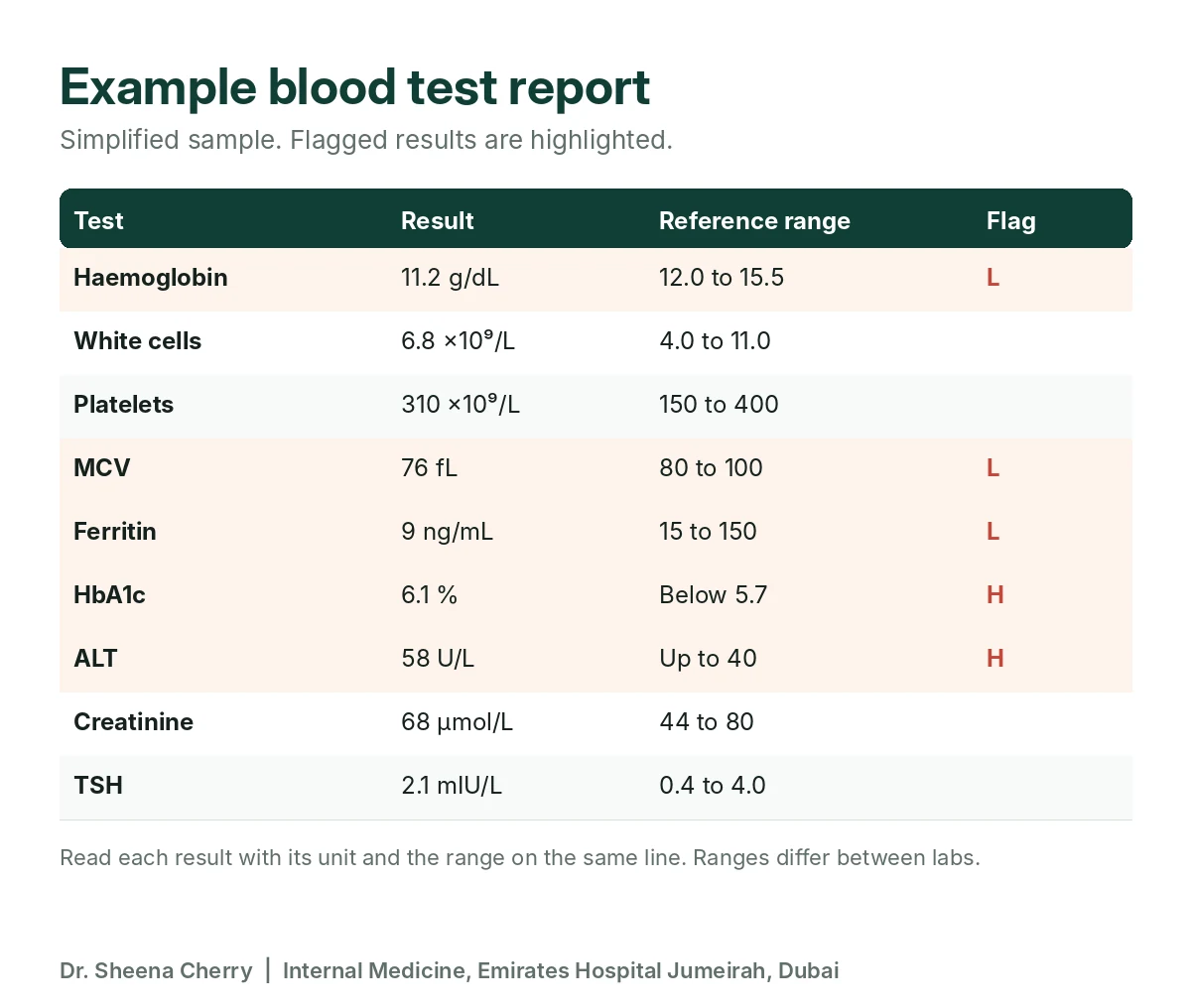
Here is how a doctor might read the simplified report shown earlier. Your own report needs a doctor’s review.
- Haemoglobin 11.2 g/dL (L), MCV 76 fL (L), ferritin 9 ng/mL (L): iron deficiency anaemia. The next questions are about periods, diet and the gut.
- HbA1c 6.1% (H): prediabetes. Lifestyle changes and a repeat in a year.
- ALT 58 U/L (H): mildly raised. With the HbA1c, fatty liver is likely. An ultrasound may be suggested.
- TSH, creatinine and the rest normal: reassuring.
The plan: treat the iron deficiency, start lifestyle changes for blood sugar and liver, and recheck in three months.
Preparing for a blood test
- Ask whether you need to fast. For fasting glucose, a fast of 8 hours is usual. Many cholesterol tests no longer need fasting, but follow your doctor’s or lab’s advice.
- Drink water unless told not to. It makes the sample easier to take and avoids dehydration effects.
- Avoid hard exercise for a day before.
- Tell the lab about medicines and supplements, especially biotin.
- Book a morning test for hormones such as cortisol or testosterone if requested.
- Use the same lab for follow-up tests when you can, so trends are easier to compare.
When to contact a doctor
- The report or lab says a result is critical or asks you to contact your doctor urgently
- Several results are flagged, or one is far outside the range
- A result has changed a lot since your last test
- You have symptoms such as tiredness, weight loss, breathlessness or fever alongside abnormal results
- You are not sure what the results mean for you
How Dr. Sheena Cherry can help
Dr. Sheena Cherry is a DHA-licensed Specialist in Internal Medicine at Emirates Hospital Jumeirah, Dubai. Reading blood results alongside symptoms is routine work in internal medicine. She reviews your report line by line, explains what each flagged result means for you, links it with your symptoms and history, and agrees what to do next, whether that is reassurance, a repeat test, treatment or further investigation. Bring your recent and older reports, even from other countries, so trends can be compared. You can also read our FAQs or see conditions treated.
Frequently asked questions
What do H and L mean on a blood test?
H means your result is higher than the lab’s reference range, and L means it is lower. A flag does not always mean a problem, especially if the result is only slightly outside the range.
What is a normal blood test reading?
A result inside the reference range printed on your report is considered normal for that lab. Ranges differ between labs, ages and sexes, so always use the range on your own report.
Is it normal to have some results out of range?
Yes. Reference ranges cover about 95% of healthy people, so about 1 in 20 healthy people will have any single result slightly outside the range.
What are the most important numbers on a blood test?
Doctors usually look first at haemoglobin, white cells, platelets, HbA1c or glucose, LDL cholesterol, eGFR and creatinine, potassium, sodium, ALT and TSH.
How do I convert mmol/L to mg/dL?
For glucose, multiply mmol/L by 18. For cholesterol, multiply by 38.67. For triglycerides, multiply by 88.57.
Why are my results different between labs?
Labs use different machines, methods and reference populations, so ranges and sometimes results differ slightly. Use the same lab for follow-up tests where possible.
Can dehydration affect blood test results?
Yes. Dehydration can raise haemoglobin, creatinine and urea, making results look worse than they are. Drink water before a test unless told not to.
Do I need to fast before a blood test?
Only for some tests, such as fasting glucose. Many cholesterol tests no longer need fasting. Follow the instructions from your doctor or lab.
What is a critical value?
A critical value is a result far enough from normal to need urgent medical attention, such as a very high potassium. Labs usually contact the requesting doctor directly when they find one.
Should I read my results before seeing the doctor?
It can help you prepare questions. Try not to draw conclusions from single results, and discuss the full report with your doctor, who can read it alongside your symptoms and history.
References
This guide is general information and does not replace a consultation. Reference ranges shown are typical adult values; always use the ranges on your own report. Read our medical disclaimer. For an emergency, call 998.
Specialist in Internal Medicine at Emirates Hospital Jumeirah, Dubai. MD in Internal Medicine, Fellowship in Critical Care Medicine and Postgraduate Certification in Cardiology from Johns Hopkins University. About Dr. Sheena